
Lead Technician
Keeping Mice and Rats Out of Your Home
Mice and rats can be more than a nuisance. They chew through wiring, they contaminate food and surfaces, and they carry organisms that make people genuinely ill. They also breed quickly enough that a pair in October is a population by February.
Most people respond by trapping, and trapping works — it empties the building. What it does not do is keep it empty, because the supply of rodents outside is effectively unlimited while the number of ways in is finite. Sealing the second is the only thing that ends the problem.
The risks, specifically
- Health hazards. Hantavirus, Salmonella and Leptospira are all associated with rodent droppings and urine. Dry sweeping droppings aerosolizes them, which is the main way people are exposed.
- Property damage. Cable sheathing, insulation and stored goods. Rodent gnawing is a recognized ignition source in structure fires.
- Food contamination. A mouse produces fifty to seventy droppings a day and is incontinent as it travels.
Signs you have a problem
- Droppings. Dark, tapered, quarter-inch for mice. Shiny means fresh.
- Gnaw marks. Distinct paired incisor grooves on timber and packaging.
- Scratching noises. In walls, attics and crawl spaces, mostly at night.
- Nests. Shredded paper, insulation or fabric, tucked out of sight.
- A musky smell. Noticeable in enclosed spaces.
- Rub marks. Greasy dark smears along skirtings where runs are established.
The work, in order
1. Survey
Find the runs before setting anything. Rub marks, droppings and a dusting of flour along a suspected route on a Friday will tell you more by Monday than any amount of guessing.
2. Trap indoors
Snap traps, set perpendicular to the wall with the trigger toward it, at intervals along the run. Bait with something sticky rather than something loose. No rodenticide inside the building envelope — a poisoned rodent dies where it is warm, which is inside a wall cavity, and the smell lasts weeks.
3. Seal everything
This is the part that matters and the part people skip because it is the most expensive line on the quote.
- Copper mesh or stainless wool packed tight into each gap.
- Mortar, cement or metal flashing over the top.
- Quarter-inch hardware cloth over vents and weep holes.
- Rigid-backed door sweeps on every external door.
- Escutcheon plates or collars where pipes pass through walls.
Expanding foam on its own is not a seal. It is softer than the mortar around it, and a mouse will be through it inside a week.
4. Remove the reasons
Food in sealed containers, pet food not left out overnight, bins with lids that close, firewood off the ground and away from the wall, and no cardboard stored in a damp crawl space.
5. Clean up safely
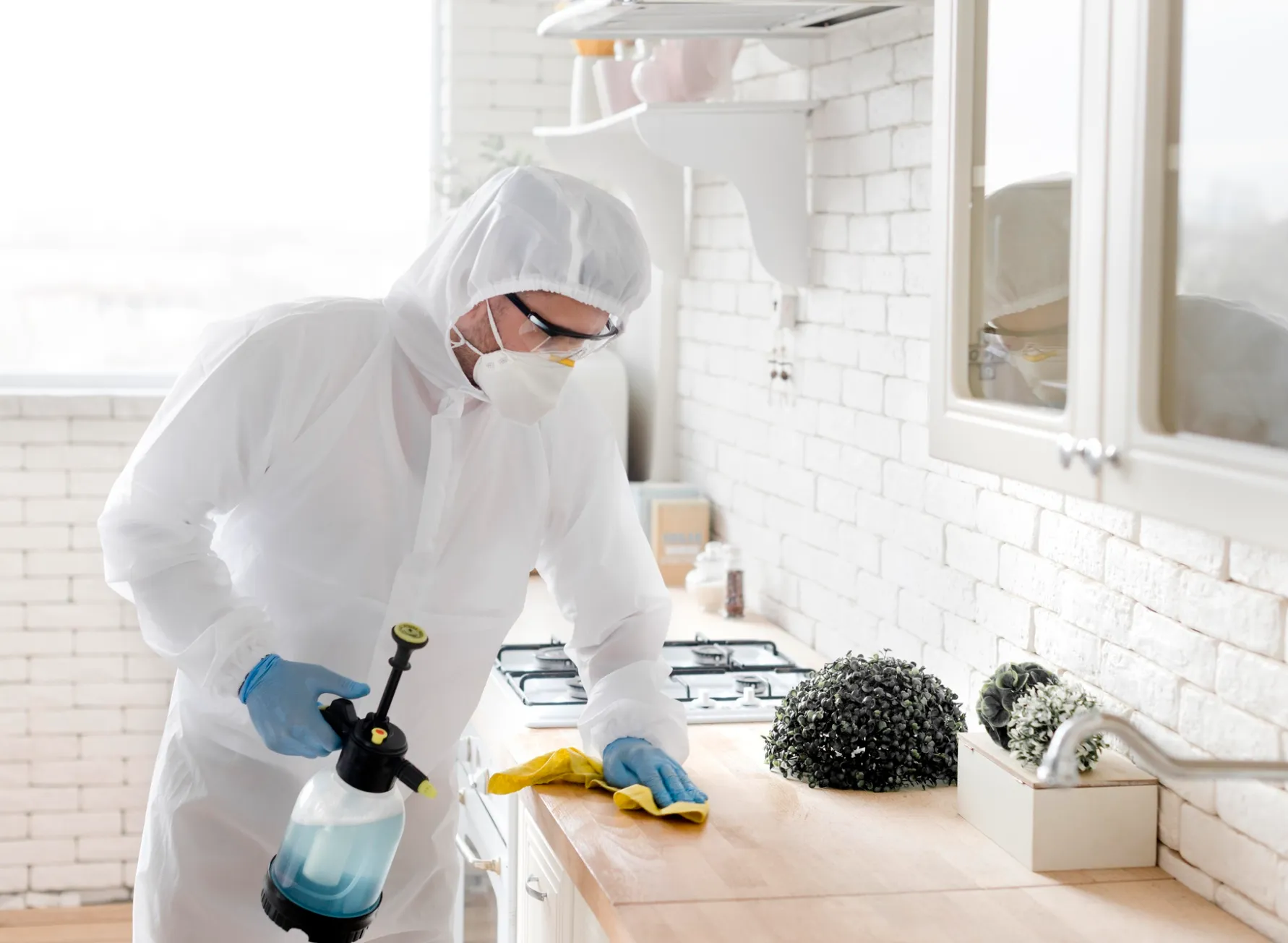
HEPA vacuum, then disinfect. Never dry sweep droppings, and wear a respirator in a confined space with heavy contamination.
When to hand it over
If the noise is inside a ceiling void you cannot access, if you are finding droppings in more than one room, if there is any sign of activity in an electrical panel, or if you have trapped repeatedly and they keep coming back — that last one almost always means a gap nobody has found yet, and finding it is the job.